
Infrasturcture Partner
Your Strategic Marine Infrasturcture Partner

The Pollution We Can't See: Underwater Noise From Ships
When we think about marine pollution, we usually imagine something we can see.
Plastic floating on the water.
Oil on the surface.
Waste along the coastline.
But there is another form of pollution that is much harder to notice.
Sound
Beneath the ocean surface, commercial vessels are constantly producing underwater noise as they travel, manoeuvre and operate their machinery.
For humans standing on shore, much of this activity may go unnoticed.
For marine animals, however, the underwater environment can sound very different.
Sound Is Important to Life Underwater
Imagine living in the ocean where visibility can be limited and sound travels much farther than it does through air.
For many marine animals, sound plays an important role in everyday life.
It can help them:
- 🐋 Communicate with one another
- 🧭 Navigate through their environment
- 🍽️ Locate and find food
- 👥 Find other members of their species
- ⚠️ Detect potential threats
This means that changes in the underwater acoustic environment can potentially affect how marine animals interact with their.
And one of the contributors to this changing environment is commercial shipping surroundings.
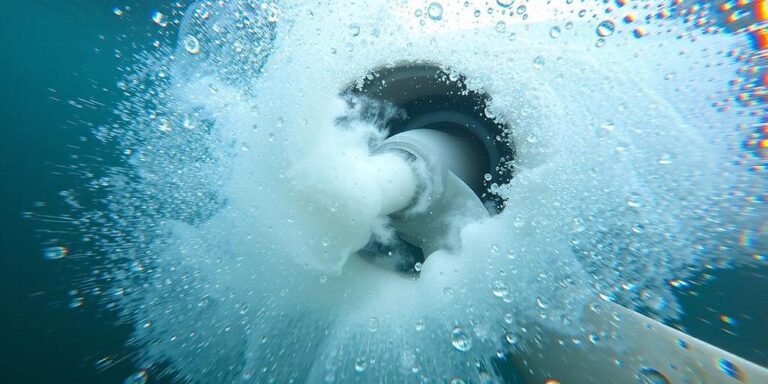
Where Does Ship Underwater Noise Come From?
Every operating vessel produces some level of underwater sound.
The sources can include:
🔹 Propellers
🔹 Main and auxiliary engines
🔹 Pumps and machinery
🔹 Thrusters
🔹 Hull vibration
🔹 Other onboard equipment
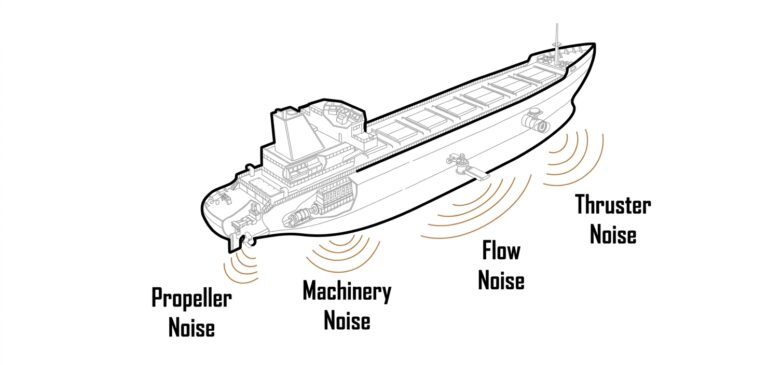
The combination of these sources contributes to what is commonly referred to as Underwater Radiated Noise (URN).
Among these sources, the propeller can be particularly important.
Propeller Cavitation: One of the Major Sources
When a ship’s propeller rotates, the pressure around the propeller blades changes.
In areas where pressure drops sufficiently, small vapour bubbles can form in the water.
This phenomenon is known as cavitation.
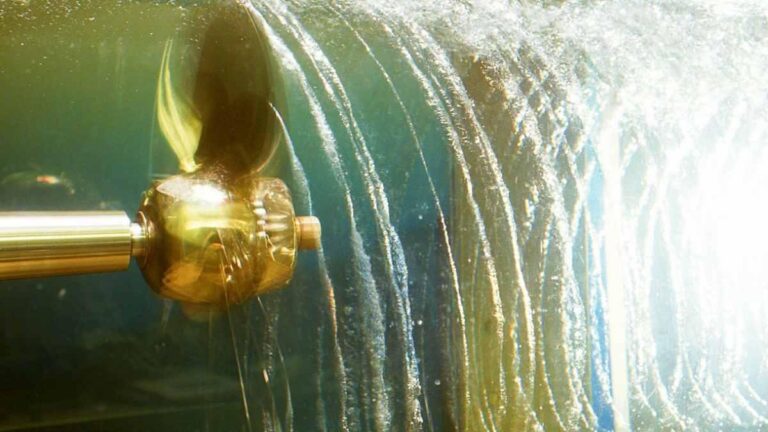
As the bubbles move into areas of higher pressure, they can collapse rapidly.
That process generates pressure fluctuations and underwater sound.
In simple terms:
Propeller rotation ➡️ Pressure changes ➡️ Cavitation bubbles form ➡️ Bubbles collapse ➡️ Underwater noise is generated
The noise can then travel through the surrounding water.
How Can This Affect Marine Life?
For marine animals that depend heavily on sound, increased underwater noise can potentially interfere with normal activities.
Depending on the species, intensity and duration of the noise, potential effects may include:
🗣️ Communication
Background noise can make it more difficult for animals to detect or distinguish acoustic signals from other individuals.
🧭 Navigation
Some marine animals use sound as part of how they understand and navigate their environment. Additional noise can make that acoustic environment more complex.
🍽️ Feeding
Noise may interfere with an animal’s ability to detect prey or interpret sounds associated with feeding.
⚠️ Behaviour
Animals may alter their behaviour or avoid areas with persistent or intense noise.
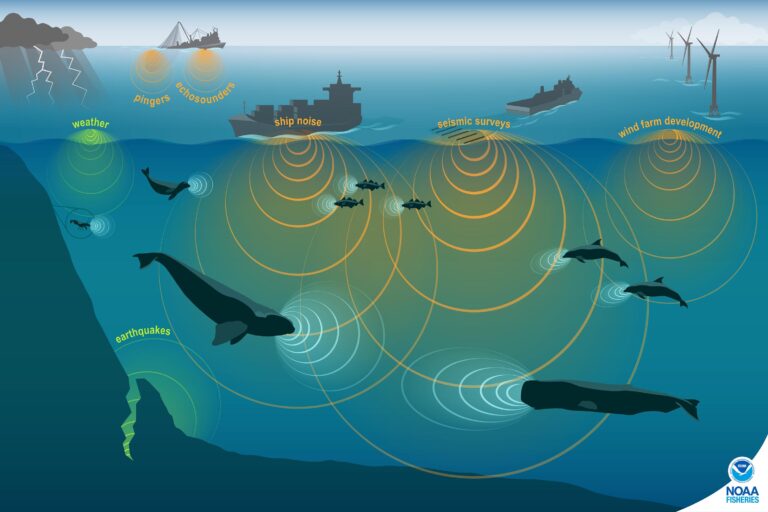
One Ship May Not Seem Significant. But What About Thousands?
This is where the issue becomes more interesting.
A single vessel passing through an area may not appear significant when compared with the vast size of the ocean.
But commercial shipping operates continuously across major trade routes around the world
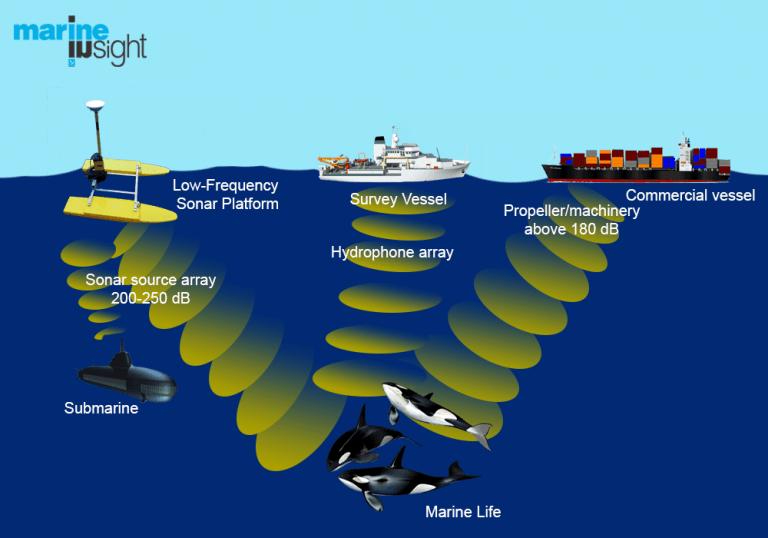
Thousands of vessels move between ports, anchorages and offshore locations every day.
The combined contribution of vessel generated underwater noise can therefore create a much larger acoustic footprint beneath the ocean surface.
And unlike an oil spill or floating waste, this form of pollution is almost impossible to see.
Can Ship Noise Be Reduced?
The maritime industry is increasingly looking at ways to reduce underwater radiated noise.
Potential approaches can include:
🔹 Improved propeller design
🔹 Propeller condition and maintenance
🔹 Hull and machinery optimisation
🔹 Reducing unnecessary cavitation
🔹 Improved machinery condition
🔹 Operational measures
🔹 New vessel and propulsion technologies
This is also where good vessel maintenance and operational practices can play a role.
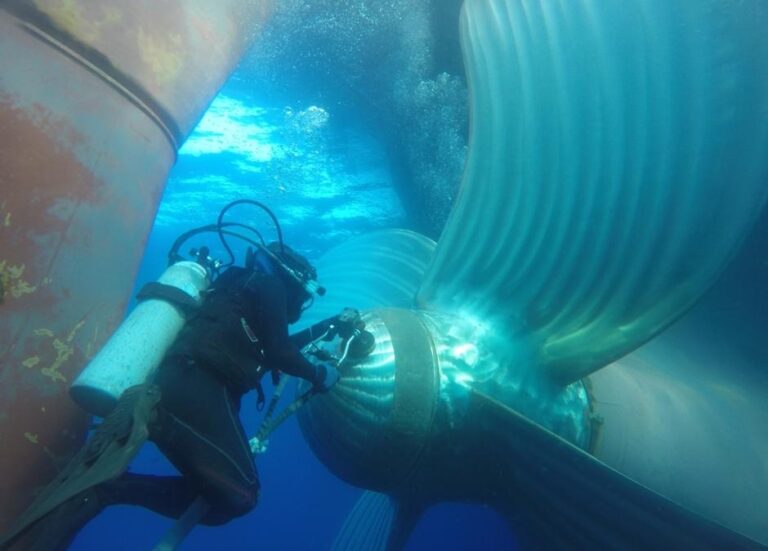
A vessel’s propeller, machinery and propulsion system are not only important for efficiency and reliability. Their operating condition can also influence how much noise is generated underwater.
⚓ What Does This Mean for the Maritime Industry?
As shipping continues to focus on environmental performance, the conversation is expanding beyond the emissions we can measure above the water.
As shipping continues to focus on environmental performance, the conversation is expanding beyond the emissions we can measure above the water.
Perhaps we should also pay more attention to what is happening below the surface.
Because environmental impact is not always something we can see.
Sometimes, it is something we can only hear.
A Quieter Future for Shipping?
The maritime industry has made significant progress in understanding the environmental impact of vessel operations.
Underwater noise is another part of that conversation.
The question may no longer be only:
“How clean is our ship?”
But also:
“How quiet is our ship?”
For ports, ship operators, vessel owners and marine service providers, understanding these less visible environmental impacts is an important part of building a more responsible maritime industry.
Because protecting the marine environment isn’t only about keeping the water clean. It is also about understanding the environment beneath the surface.